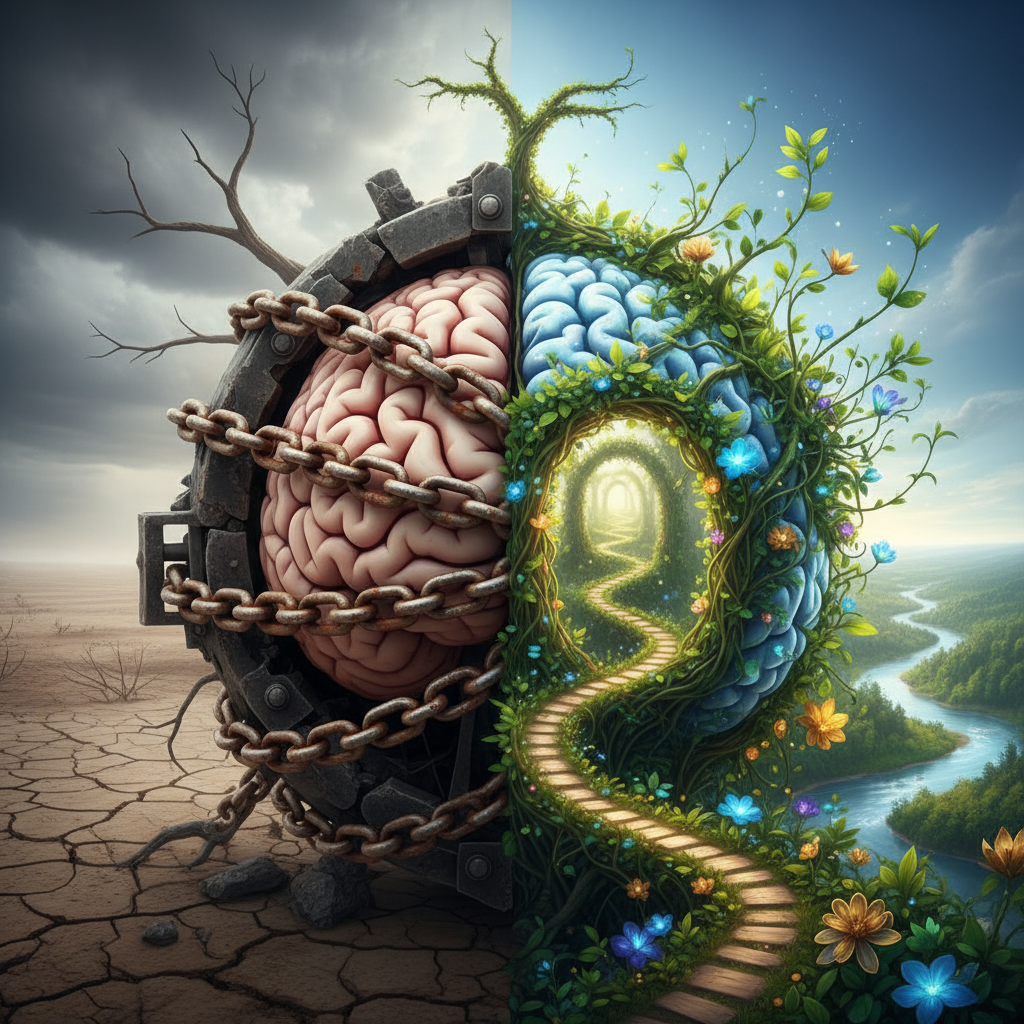
### Understanding Fixed versus Growth Mindset
At the core of personal development and the psychology of success is the understanding of mindset. Pioneering research by psychologist Carol Dweck has fundamentally shaped our understanding of how beliefs about abilities affect personal growth, and her work is central to this section.
#### The Fixed Mindset
A fixed mindset is based on the belief that talents and abilities are set in stone. If you believe your intelligence or personality traits are static, you are likely to approach challenges with a sense of inevitability and defeatism. "I’m just not good at math" or "I’m not a natural athlete" are statements often made by those with a fixed mindset. This perspective suggests a limitation, creating barriers to learning and improvement. Individuals with a fixed mindset might avoid challenges because they fear failure or judgement, interpreting setbacks as a lack of inherent ability.
#### The Growth Mindset
In contrast, a growth mindset thrives on challenge and sees failure not as evidence of unintelligence but as a springboard for growth and for stretching existing abilities. It is grounded in the belief that one’s abilities and intelligence can be developed through dedication and hard work. Statements like "I can learn new things" or "I can get better with practice" typify this mindset.
A growth mindset fosters resilience. When faced with obstacles, those with a growth mindset are more likely to persist, continually striving and learning from each experience. Instead of viewing effort as a sign of inadequacy, it is seen as the key to mastery and accomplishment.
### Application in Daily Life
Incorporating a growth mindset into your daily life involves recognizing and altering your internal dialogue. Replace negativity or excuses with constructive and positive thoughts. For instance, instead of saying "I’m not good at this," you might say, "I'm not yet good at this — but I am on the way." Such simple shifts in self-talk can make a significant difference in your personal and professional life.
Furthermore, understanding that skills can be improved with effort can transform the way we perceive challenges. Instead of shying away from difficulties, embrace them as opportunities for learning. This approach is crucial for personal development as it fosters lifelong learning and adaptability, critical traits in today’s fast-paced world.
### Fostering Personal Development and Resilience
Enhancing your mindset involves more than just verbal affirmations; it requires a commitment to learning and resilience. Take ownership of your growth by setting realistic yet challenging goals, and monitor your progress regularly. Celebrate achievements along the way, however small, as they build toward larger successes.
Moreover, embrace constructive criticism. Feedback is a valuable tool in the growth process and plays a crucial role in personal and professional development. Viewing constructive criticism as an opportunity to gain insight and to enhance skills can lead to significant improvements.
Resilience is also a by-product of a growth mindset. By facing and overcoming adversity, you can develop the endurance necessary to handle setbacks and failures, ultimately achieving greater success. Learn to view setbacks as opportunities for growth rather than as insurmountable obstacles.
In summary, the mindset you cultivate can be a powerful tool in navigating life's challenges and achieving your goals. By adopting a growth mindset, you open yourself to a world of possibilities and personal growth.